



Electric Unicycle Maintenance: What You Can Do Yourself to Keep Your Wheel in Good Condition
When riding an electric unicycle becomes second nature, it feels incredibly simple — you step on and ride. And every now and then you smile when someone asks, “how do you even ride that thing?”
You ride, explore new places, meet new people. Life is good. Until one day something starts humming, wobbling, or beeping. Not all at once — gradually. And usually at the worst possible moment.
Most of the time, the problem isn’t that the wheel is bad. The problem is that no one told you what to actually pay attention to — both in daily use and when issues start to appear. The good news: most of these problems can be prevented.
One wheel, no backup plan
A unicycle is a technical system where everything has to work together precisely: one wheel carries your entire weight, the motor drives and brakes, the electronics keep you balanced, and the battery has to handle both heat and cold.
If you don’t pay attention to maintenance at all, small issues start to build up over time, and eventually something will fail. If one part doesn’t work, the whole system doesn’t work.
That’s why unicycle maintenance needs to be approached a bit differently — both by the rider and in servicing.
The good news is that manufacturers have improved safety significantly in recent years. For example, a hall sensor failure no longer automatically means a crash — the wheel can warn the rider and allow a safe stop. Motherboards are also more resistant to high current loads than before.
But physics hasn’t changed. If a worn tire fails at high speed or moisture causes a short circuit, there’s not much you can do at that point. These are exactly the kinds of things that should be noticed during maintenance — before anything happens.
Water and moisture – the most expensive problems
Properly understanding your wheel’s water resistance is critical. Many riders don’t actually know whether their wheel has a water resistance rating or what kind of use it allows — light rain, heavy rain, puddles, slush, and so on. The same applies to cleaning — people often don’t know what methods are safe and how they might damage the wheel themselves.
A very common approach is simply “trying and seeing what happens.” And sometimes it works… until it doesn’t. Even if the wheel seems fine at first, moisture can already be inside, and corrosion will slowly do its job until failure becomes inevitable. More experienced riders don’t take that risk. If they know the wheel has been exposed to more moisture than it should have, they either open it themselves or bring it in for service to check immediately whether water has reached the inside — and where.
After that, you can make an informed decision: avoid that type of use in the future or improve the wheel’s water resistance (which Voltride also offers). If the wheel has an IP rating from the manufacturer, opening it yourself is not allowed from a warranty perspective and is strongly discouraged. Why? Because if it’s not reassembled properly, the water resistance may be compromised — and that can lead to serious damage.
If you ride in wet conditions or in winter with snow and slush, cleaning and drying the wheel becomes especially important. In some cases, this helps remove moisture that has entered the casing, motor, or bearings. Sometimes it works — sometimes it’s already too late. Winter adds another risk: road salt. Salt breaks down protective grease and seals, and can crystallise between them, creating a path for water to reach the electronics, battery, or motor.
The most common and expensive moisture-related damage:
- battery damage
- motor damage
- controller failure
Battery – the most expensive component, and easy to damage
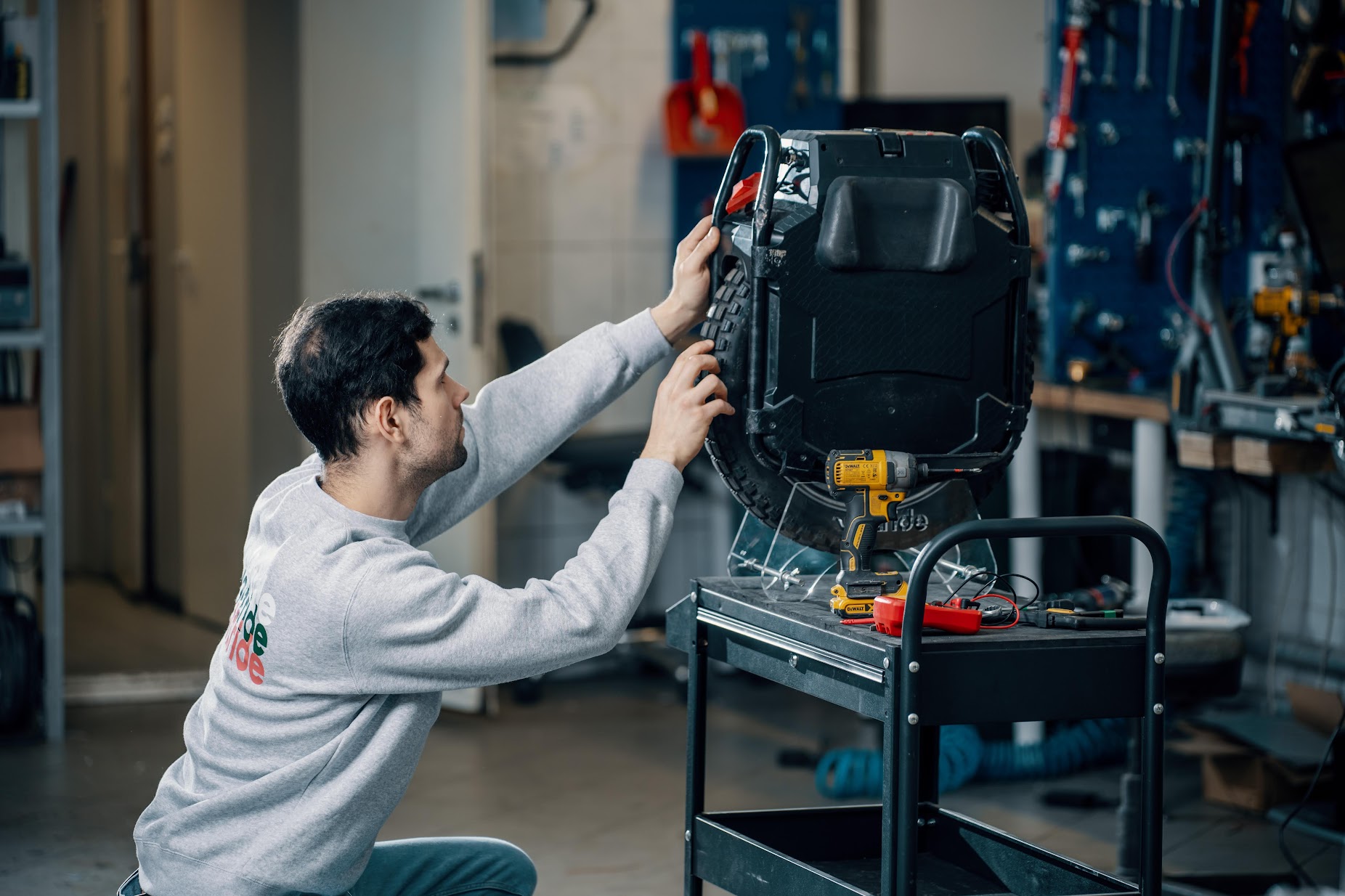
Replacing a battery can cost over €1000, and such cases are usually not covered by warranty. Battery lifespan depends largely on how it is used and stored. If the wheel sits unused for a longer period — for example over winter — make sure the battery is stored at around 50–60% charge. It should not be fully charged, and definitely not empty.
Leaving a lithium battery empty for a long time can permanently damage it, and in spring you may find yourself needing a full replacement. During storage, check the battery every couple of months. If it drops below 50%, charge it back to around 50–60%.
Lithium batteries also don’t like cold temperatures. The battery should not be stored long-term below 10°C, and it should never be charged when cold. After riding in cold weather, let the wheel warm up indoors before charging. Riding in winter won’t damage the battery, but you should expect significantly reduced capacity — and therefore shorter range.
A clean wheel lasts longer
Keeping your unicycle clean plays a major role in keeping it in good condition. This is especially important if you ride in wet conditions or during winter. Even if the wheel has an IP rating, it should be cleaned and dried as soon as possible after riding in moisture. Winter conditions are particularly harsh because of road salt. Salt breaks down protective grease and seals and can create pathways for water to enter sensitive components. That’s why it’s important to remove snow and not leave the wheel sitting covered in it.
Even if you only ride in dry conditions, it’s still worth keeping the wheel clean. You don’t need to clean it after every ride, but removing dust regularly helps. Pay special attention to moving parts. The best way to clean the wheel is with a damp cloth. Do not use running water or a pressure washer. Do not use alcohol or other solvents.
Suspension – if it doesn’t work, the ride changes completely
If your unicycle has suspension, maintaining it is not a minor detail — it’s the foundation of riding comfort. A poorly functioning suspension feels like riding on a hard stool with no cushioning. Keep the suspension area clean and check from time to time that it moves smoothly and doesn’t stick. If your wheel has air suspension, you also need to occasionally check and adjust the pressure. Dirt and neglected seals wear out suspension components quickly — and you’ll feel that immediately while riding.
If your wheel feels off, start here
Correct tire pressure is the foundation of stability on an electric unicycle. If the pressure is off, the wheel won’t feel stable. Too low pressure can cause loss of grip in turns and lead to a fall. It also wears out the inner tube faster. Typical tire pressure is between 1.9–3.0 bar, depending on the model and rider weight. It’s worth checking every couple of weeks. In practice, riders prefer very different pressure levels. A wheel at 1.5 bar feels very different from one at 3.3 bar. Tire pressure also affects range — higher pressure generally rolls better and increases range.
Sometimes it’s not mechanical – software updates
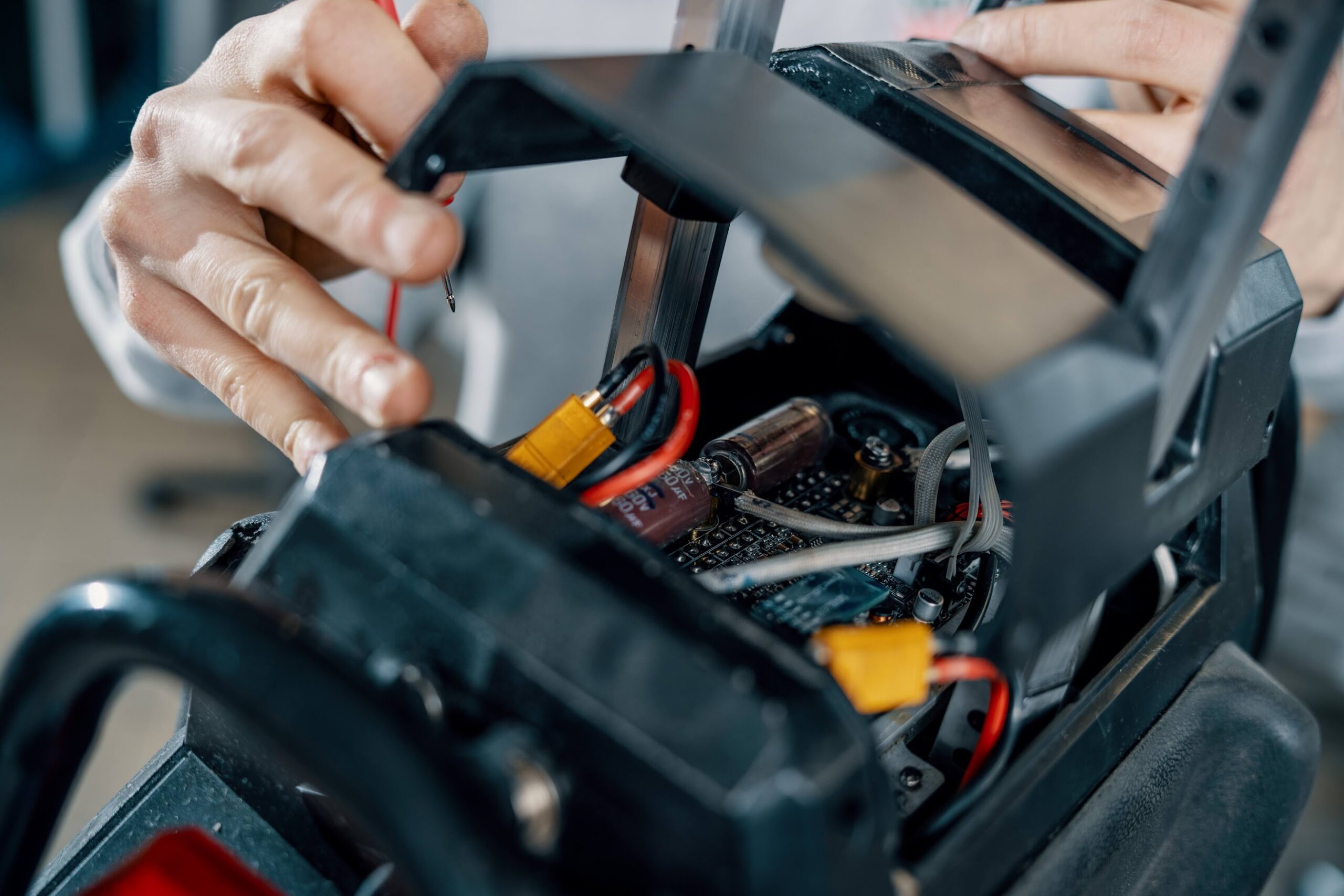
Most unicycles have an app through which software updates are released from time to time. These updates often improve system stability and fix issues in the software. Sometimes they even add new functionality. Keeping your wheel’s software up to date is important.
When to see a professional – don’t wait until it stops working
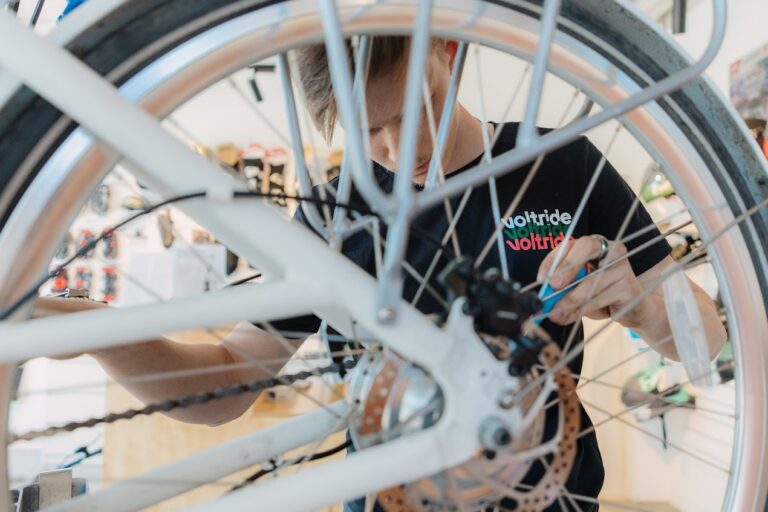
If your wheel makes unusual noises, shows error codes, or behaves differently than before, it’s worth having it checked by a specialist. The same applies to tire changes and similar work — since the tire is mounted directly to the motor, replacing it often requires significant disassembly. It’s recommended to have your wheel serviced at least once a year or every 1000–2000 km.
Note: many riders also use service visits to improve usability — adding power pads, jump pads, a seat, bumpers or extra lights. These upgrades don’t just make the wheel look better, they genuinely improve control and comfort. Often, it makes the most sense to do them during regular maintenance.
See what our customers say








Since 2016 Voltride has shipped over 12,000 packages to private and B2B customers


Fast Shipping all across Europe

Watch Us in Action
Voltride for Commuters, Active Riders and Professional Users
Voltride started in 2016 as a family company gathering enthusiasts and specialists to attract more and more people and businesses to the electric lifestyle. Lifestyle of fun and function, or to put it more elegantly: commuters, active riders and professional users in delivery, tourism and business operations. Voltride is one of the largest players in Scandinavia and the Baltics in the area of personal electric mobility, serving customers across Europe.
Over 12,000 items shipped
2,000 + products and spare parts available in stock
Deliveries to over 34 countries






 About Us


