



How to Choose an Electric Unicycle – A Simple and Practical Guide
Choosing an electric unicycle can feel quite complicated. And honestly — at first, it is. Especially if you’re new to it. There are many models, and the internet is full of different opinions. Things get much simpler when you start with one question: where and how will you actually ride?
Most people skip this — and that’s where wrong decisions usually begin.
To make it a bit less overwhelming: many of our customers end up owning more than one unicycle. Your first one doesn’t have to be your last. To keep things clear, we divide electric unicycles into these categories: beginner models, city riders, long-distance models, off-road and jump-focused models, and performance models.
Below are the most important things to consider before buying.
For beginners – how experienced are you really?
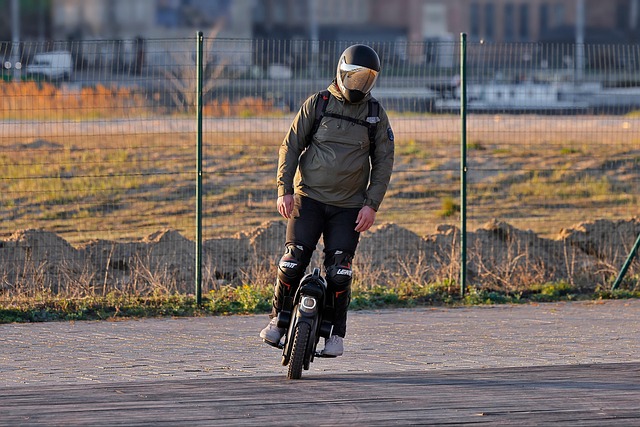
If you’re a complete beginner, it makes sense to choose a model with a calmer and more forgiving character. In practice, that mainly means a wheel with a low centre of gravity and low-mounted pedals, which makes it much easier to control. The wheel should not be too heavy (for example up to 25 kg), and its body should be as beginner-proof as possible — without easily breakable parts that could get damaged in the hands of a new rider.
One of our solid recommendations for a first wheel is the Kingsong 18L or 18XL, as well as the Kingsong 16S. For younger riders and lighter people, the Kingsong 16S or 14D/S can also be a comfortable way to start. For children, the Kingsong 9S — also known as the “basketball” — is an exciting option. If you feel especially unsure, the Inmotion E22 can be a good place to begin — a two-wheeled unicycle that stays upright on its own in every direction.
If you already have balance-related experience — for example from skateboarding, snowboarding, hoverboards, slacklining, gymnastics or something similar — you can also start with a more demanding and powerful wheel. But that doesn’t mean you need to buy the most expensive machine right away (even though people do that too, and there’s nothing wrong with it).
Use defines everything – what are you actually buying the unicycle for?
Before you start comparing technical specs, think through where and how you’ll actually be riding. For everyday commuting, the most important thing is that the wheel gets you there reliably — and back home again. That means enough range, good manoeuvrability in city traffic, and proper lights if you ride in the dark. A very practical detail is the trolley handle — it lets you roll the wheel next to you in a shop, office or on public transport instead of awkwardly half-running over it.
The city doesn’t need a monster
There’s quite a wide range of wheels that can fit city riding. For some riders, it’s important that a city unicycle is light and compact — easy to take on public transport. Others want more comfort — suspension and a seat. A third group wants a high level of water resistance, because the wheel needs to work in all weather. And so on. In general, it doesn’t make much sense to buy a massive, big-battery monster for city riding — it simply becomes too cumbersome to deal with in everyday urban life. The exception is if you use it for work, for example as a courier. Then battery size, proper suspension and water resistance become much more important.
One of the specific features of city riding is frequent interaction with other road users and pedestrians. Since unicycles usually don’t come with a bell, it’s worth having a cheerful little bike bell somewhere on the wheel or in your hand. It makes passing pedestrians safer and sometimes a bit more fun too.
Long distances need a big battery
A large, stable, comfortable wheel with good range is the better choice if you want to use your unicycle for longer rides with friends. Or if you often need to cover longer distances — for example 60 km from the city to the countryside, or 25 km from home to the train station. A long-distance wheel usually has a bigger battery, for example 3600 Wh, a larger tyre diameter (18–20”), and often suspension and a seat as well. As for riding gear, in addition to full protective equipment, it’s worth considering a rear-view mirror and, if you use an open-face helmet, glasses. Experience shows that these larger wheels are often preferred by heavier men — then there’s less worry that the battery or power will run out before the rider does. These are also often the preferred choice for people earning their living as couriers.
Forest trails and jumps call for suspension
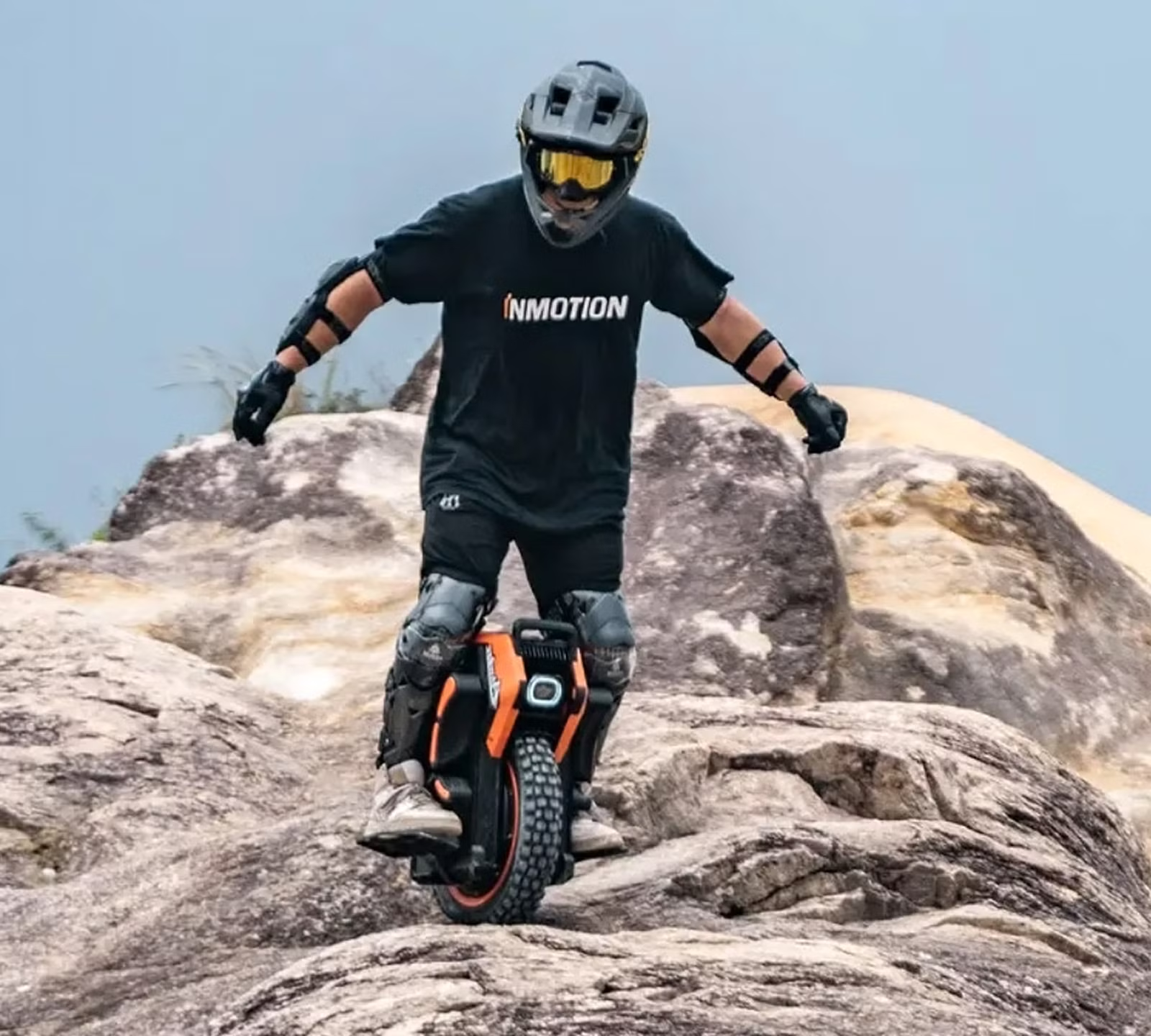
If you plan to ride on forest trails, gravel roads or rougher streets (for example cobblestones in old town areas), your expectations of the wheel change accordingly. Tyre tread, torque, suspension, suspension travel and adjustability all become much more important. The last of these matters especially to riders who want to join mountain bikers on jumps and singletrack. On top of that, frame and pedal durability and dust resistance of the electronics also matter.
A unicycle built for off-road riding has pedals that sit significantly higher from the ground than on a city wheel or most cruisers. The reason is simple: to avoid getting caught on rocks and stumps. For a beginner, learning on a wheel with high pedals is a bit more difficult, which is why it isn’t the best option for most first-time riders.
Racing wheels (and gear) depend on the type of competition
Racing wheels are basically the same wheels used for long-distance or off-road riding — they’re simply the newest, most powerful and quite often the most expensive models in those categories. Track wheels have huge acceleration and top speed, often paired with top-level road tyres such as the Michelin Pilot Street. Riders often modify these wheels to achieve a more efficient riding position, better braking and acceleration, and improved cornering. Extra effort is also often made to protect the wheel in case of a crash. Wheels built for off-road and jumps are also modified, often even specifically for a certain competition — suspension, tyres, power pads and so on.
Range – leave yourself some margin
Range is the number everyone looks at — and also the one most often misunderstood. Manufacturer range figures are measured in ideal conditions: smooth asphalt, warm weather, steady pace and a featherweight rider. Real life looks different. Range is affected by riding style, rider weight, tyre pressure, whether you ride standing or seated, cold weather, headwind, terrain, road surface, speed and more.
That’s why it makes sense to choose a wheel whose battery gives you a bit more than you need day to day. To put that into perspective: if the claimed range is 100 km (with a battery capacity of around 2000 Wh), then in real city riding a calm rider can usually expect around 70–80% of that, so roughly 75 km. With aggressive and faster riding, range is significantly shorter, and off-road it can drop to around half of the claimed maximum.
If the rider weighs more than 90 kg, range drops by another 10–15%. In cold weather, it decreases even more compared to summer. On the other hand, range can be better than the manufacturer figure if the rider is, for example, a child or teenager weighing only 50 kg. Riding with underinflated tyres, by contrast, increases energy consumption.
What does real life show? We did a range test
We ran a range test with the Veteran Sherman (3200 Wh) and the Begode Monster Pro (3600 Wh). We rode the Sherman standing and the Begode seated. Speeds were similar, between 25 and 30 km/h. The Sherman used about 21.8 Wh per kilometre, while the Begode used 14.7 Wh — meaning that in our test, riding seated reduced energy consumption by nearly 30%. In total, the Sherman managed 140 km and the Begode 221 km on a single charge.
For comparison, with active and fast off-road riding, energy use can easily reach 40–50 Wh per kilometre. Based on these figures, anyone can estimate the real-world range of a planned wheel, whether riding economically or pushing it hard.
Power is not about showing off
People often look at top speed first. In real life, what matters more is whether the wheel has enough power to keep the rider upright in every situation. For example, when hitting a pothole at speed, climbing back out of the edge of that hole creates a sudden need for a lot of extra power. The wheel needs to have that reserve, otherwise balance is lost. The same applies when going down a steep hill — a powerful motor must be able to brake both the wheel and, say, a 120 kg rider before the next intersection, without burning itself out.
This is a classic risk management question — do you have enough reserve to get through a crisis? From a safety perspective, motor power is one of the most important factors on a unicycle. Because power levels vary so much and are designed around different use cases, this is something worth discussing with a Voltride sales advisor.
A more powerful wheel doesn’t mean you have to ride faster. It means you have more reserve — the motor isn’t constantly working at its limit, and there’s less risk of the wheel repeatedly slowing you down and warning you under heavy load. This is not a comfort issue. It’s a safety issue.
Bigger is not always better
Wheel diameter affects the riding experience more than you might think at first. A smaller unicycle is generally lighter and easier to control at lower speeds. It’s better for tight spaces and easier to lift into a car or carry up the stairs. At the same time, a smaller wheel lets you feel bumps and potholes more clearly.
A larger wheel, by contrast, rides in a calmer and more stable way, especially on rougher roads. At higher speeds, it feels more planted and secure. The downside is that a bigger wheel is heavier and more awkward if you need to carry it often or take it on public transport. The first time it doesn’t feel that heavy. By the third floor without a lift, it definitely does. On the largest wheels (20–22”), you also start to feel the gyroscopic effect while riding — changing direction becomes harder, especially for lighter riders on a large and heavy wheel.
Suspension – comfort few want to give up once they’ve tried it
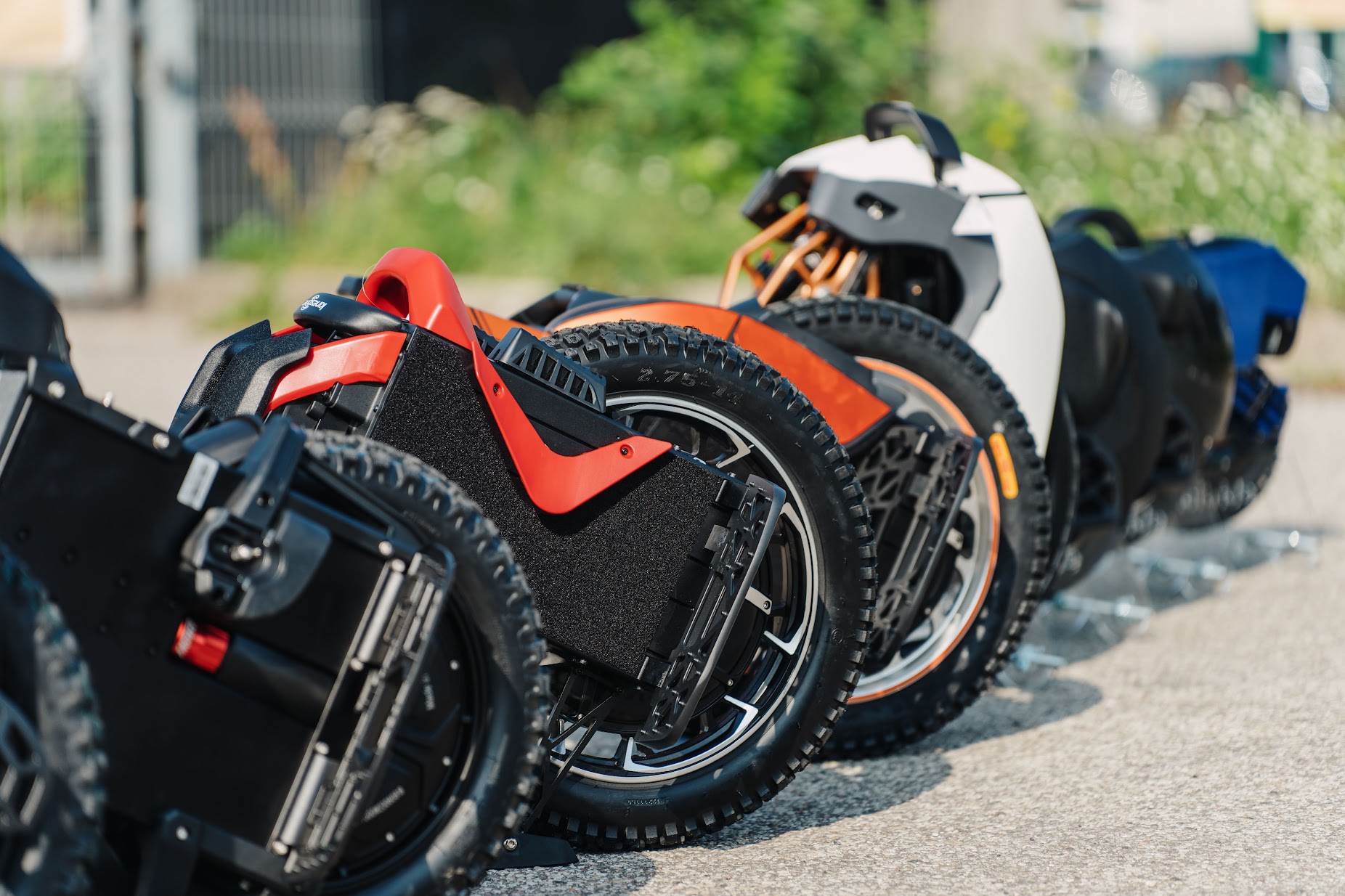
Suspension makes the ride noticeably smoother, especially if the roads are full of holes or you plan to ride on gravel and forest trails. A good shock helps absorb impacts and significantly improves safety. On longer rides, you start appreciating it very quickly.
If you mainly ride on smooth asphalt and your trips are shorter, suspension is not essential at first. It does add comfort, but it also adds weight.
Rain and weather — one misunderstanding can cost over €1000
“Water-resistant” does not mean you can play submarine with the wheel. Every water resistance rating (IP) comes with a specific type of use that does not put the wheel at risk. This is one of those details worth paying attention to when buying. It’s a shame when a new wheel becomes unusable soon after purchase simply because the owner did not know what was and wasn’t okay to do.
Most unicycles can handle moisture and splashes, but regular riding in wet conditions means more maintenance — especially when it comes to bearings and seals. Different manufacturers use different methods to achieve water resistance. Some seal the shell, some seal the components, and some design the shell so that water can pass through while placing the electronics in a way that keeps them dry. Excess moisture is then drained out through holes at the bottom.
The most common and expensive water or moisture damage affects the battery and the motor. Controller damage is not cheap either. If the battery is ruined, a new one can easily cost well over €1000. If moisture has entered the wheel, it is generally considered a non-warranty case unless there is clear evidence of a product or assembly defect.

Quick decision checklist
If you don’t want to remember all of the above, start here:
- How long is my typical ride?
- Do I ride only in the city, or also on gravel and in the forest?
- Do I need to carry the wheel often?
- Do I prefer lightness and playfulness, or stability and comfort?
If these questions made you think, you’re already halfway to finding the right wheel.
Send us your answers and we can look together at which electric unicycle suits your needs best.
See what our customers say








Since 2016 Voltride has shipped over 12,000 packages to private and B2B customers


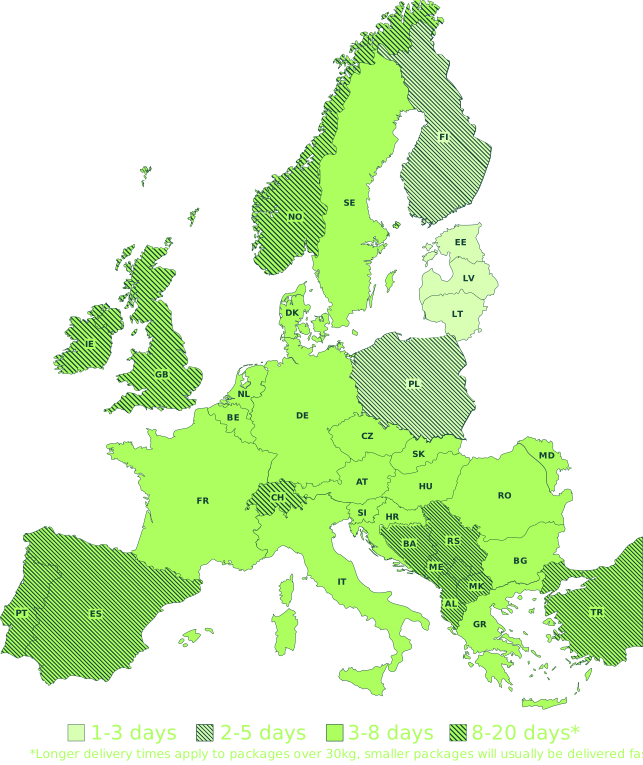
Fast Shipping all across Europe
Watch Us in Action
Voltride for Commuters, Active Riders and Professional Users
Voltride started in 2016 as a family company gathering enthusiasts and specialists to attract more and more people and businesses to the electric lifestyle. Lifestyle of fun and function, or to put it more elegantly: commuters, active riders and professional users in delivery, tourism and business operations. Voltride is one of the largest players in Scandinavia and the Baltics in the area of personal electric mobility, serving customers across Europe.
Over 12,000 items shipped
2,000 + products and spare parts available in stock
Deliveries to over 34 countries




 About Us


